

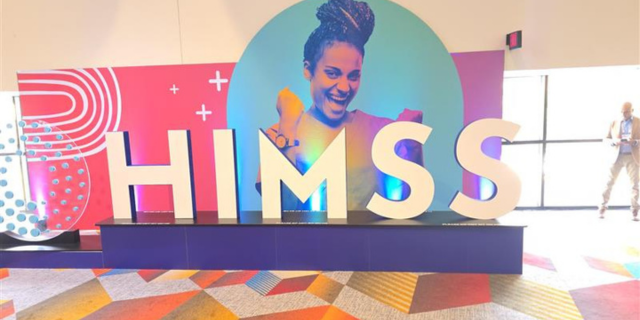
AI and virtual nursing technology are becoming more connected
AI was still one of the most visible topics at HIMSS, but the way people talked about it has changed. There’s less focus on potential and more focus on outcomes. Healthcare leaders are asking whether AI is actually reducing workload, improving access, or solving operational challenges in a meaningful way.
In many cases, AI is gaining traction in administrative workflows like scheduling and patient communication. But when it comes to clinical environments, there’s still a strong preference for maintaining control. Clinicians want technology that supports their workflows, not something that disrupts them.
We saw this play out in real conversations as well. A lot of attention at HIMSS was directed toward AI, cybersecurity, and process improvement. Video wasn’t always the headline topic, but it consistently came up when discussions shifted toward care delivery, especially in the context of virtual nursing technology.
It’s no longer viewed as a standalone solution. Instead, it’s part of a broader ecosystem supporting how care is delivered across locations.
From innovation to proof in virtual nursing technology
Another clear takeaway from HIMSS was how buyers are evaluating solutions. It’s no longer enough to demonstrate what a platform can do. Healthcare organizations want to understand how it performs in real environments.
They are asking where it has been deployed, how it scales across facilities, and whether it can support use cases like virtual nursing, observation, and patient engagement without adding complexity.
Wir haben auch noch etwas anderes festgestellt. Einige der wertvollsten Gespräche fanden außerhalb der offiziellen Sitzungen statt. Die Teilnahme ohne Messestand führte zu direkteren, praktischen Gesprächen sowohl mit Teams aus dem Gesundheitswesen als auch mit Partnern. Es ergaben sich Gelegenheiten, über reale Herausforderungen zu sprechen, z. B. darüber, wie sich die virtuelle Pflegetechnologie in bestehende Umgebungen einfügt.
At the same time, it reinforced the importance of more targeted outreach before events, especially when engaging with EMR vendors and integration partners.
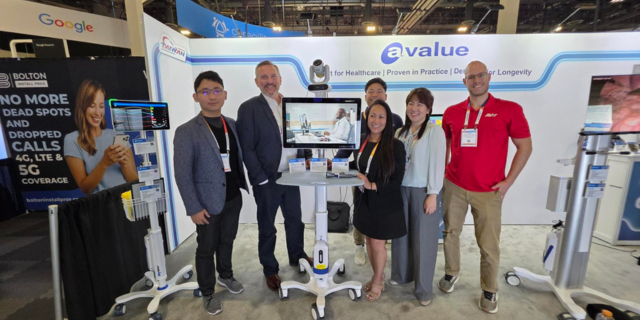
Integration is essential for virtual nursing technology
Interoperability didn’t stand out as a major talking point this year, and that’s because it’s now expected. Healthcare organizations assume that solutions will integrate with their existing systems, especially EMRs, without creating additional friction.
What matters now is how easily that integration happens and how quickly teams can implement and use the technology. This came up frequently in conversations around EMR integration and partner ecosystems.
As virtual nursing programs expand, virtual nursing technology has to work seamlessly within those environments. It can’t operate in isolation. It needs to connect to clinical workflows, patient records, and communication systems in a way that feels natural.
Making existing infrastructure work for virtual nursing technology
One of the most consistent themes we heard was the desire to avoid replacing existing infrastructure. Healthcare organizations are being asked to expand services, but they are also managing tight budgets and limited resources.
Most of the hardware they rely on is still functional. Carts, cameras, tablets, and room systems are already in place. The challenge is getting those components to work together in a consistent way.
In discussions with partners, there was a growing emphasis on delivering more complete solutions that combine video, carts, and cameras into something cohesive. That kind of approach supports virtual nursing technology without forcing organizations to start over.
Instead of replacing systems, the focus is on connecting them.
Virtual nursing technology and the move toward platforms
There is also a noticeable shift away from managing multiple, disconnected tools. Many healthcare teams are dealing with separate systems for consults, observation, communication, and training. Over time, this creates complexity that is difficult to manage and scale.
What organizations are increasingly looking for is a more unified approach. A platform that can support multiple workflows, including virtual nursing, within the same environment.
We also saw competitors and adjacent players positioning themselves in this space, particularly from communications and infrastructure perspectives. However, there is still a gap when it comes to solutions that are designed specifically for healthcare workflows and the realities of care delivery.
This is where virtual nursing technology becomes more effective. When it’s part of a broader platform, it’s easier to standardize workflows and expand across locations.
What we heard about virtual nursing technology at HIMSS
Across conversations, the challenges were consistent. Healthcare teams are trying to expand virtual observation and virtual nursing programs across multiple locations while maintaining consistent workflows.
They are working in environments where devices and network conditions vary. They are trying to reduce friction for clinicians and patients. And they are trying to do all of this without introducing additional systems.
There is clear momentum behind virtual nursing technology, but it needs to be practical. It needs to fit into the way teams already work.
These are not experimental use cases anymore. They are active priorities.
How Enghouse supports virtual nursing technology
The conversations at HIMSS aligned closely with what we hear from customers more broadly. Healthcare organizations are not looking for entirely new systems. They are looking for solutions that fit into what they already have in place.
Enghouse approaches this by focusing on flexibility. Instead of requiring infrastructure changes, the goal is to connect existing devices and workflows into a single environment that supports multiple use cases, including virtual nursing.
This makes it easier to integrate with EMRs, support different devices, and expand programs over time. It also aligns with the way healthcare organizations are approaching virtual nursing technology today, which is to build on what already exists rather than replace it.
The takeaway on virtual nursing technology
HIMSS 2026 reinforced a clear direction for healthcare technology. Organizations are moving forward, but they are doing so with a focus on what works in real environments.
Virtual nursing technology is becoming a central part of that shift, but only when it is implemented in a way that is sustainable and easy to manage.
That means prioritizing solutions that integrate easily, support existing workflows, and allow healthcare teams to scale without unnecessary disruption.
That’s where the focus is now, and it’s likely where it will stay.
 English
  Français
  日本語
日本語  Español
  Italiano
  Nederlands
  Deutsch