








Internal communications have never been more important or more challenging.
Today's workforce is more distributed than ever, with employees working from offices, homes, manufacturing plants, retail locations, and customer sites around the world. Keeping everyone informed, aligned, and engaged requires more than sending emails or posting updates in collaboration tools.
That's why many organizations are rethinking their approach to video and investing in an enterprise video platform for internal communications.
The goal is no longer to produce more video content. It's to ensure employees can easily find important information, engage with leadership, and take action on the messages that matter most.
The Growing Challenge for Internal Communications Teams
The modern workplace has transformed dramatically over the past few years.
Hybrid and remote work have become standard, while frontline employees continue to work outside traditional office environments. At the same time, organizations are producing more digital content than ever before.
Employees are expected to keep up with emails, chat messages, meetings, intranet updates, and training materials, all while managing their daily responsibilities.
For Internal Communications teams, this creates a significant challenge.
How do you ensure employees actually see and understand critical information?
This question becomes even more important when communicating:
- Leadership updates
- Organizational change initiatives
- Compliance requirements
- Safety announcements
- Company news
- Employee training
- Knowledge sharing
If employees can't easily access or engage with these communications, their impact is greatly reduced.
Why Traditional Video Platforms Are Falling Short
Many organizations already use video, but not all video solutions are built for enterprise communications.
Traditional video hosting platforms are often designed to store and share content rather than support strategic internal communications. As organizations scale, several common challenges begin to emerge.
Content Is Scattered Across Multiple Systems
Videos often live in Microsoft Teams, SharePoint, learning management systems, intranets, and third party platforms.
Instead of having one destination for important communications, employees must search across multiple locations to find what they need.
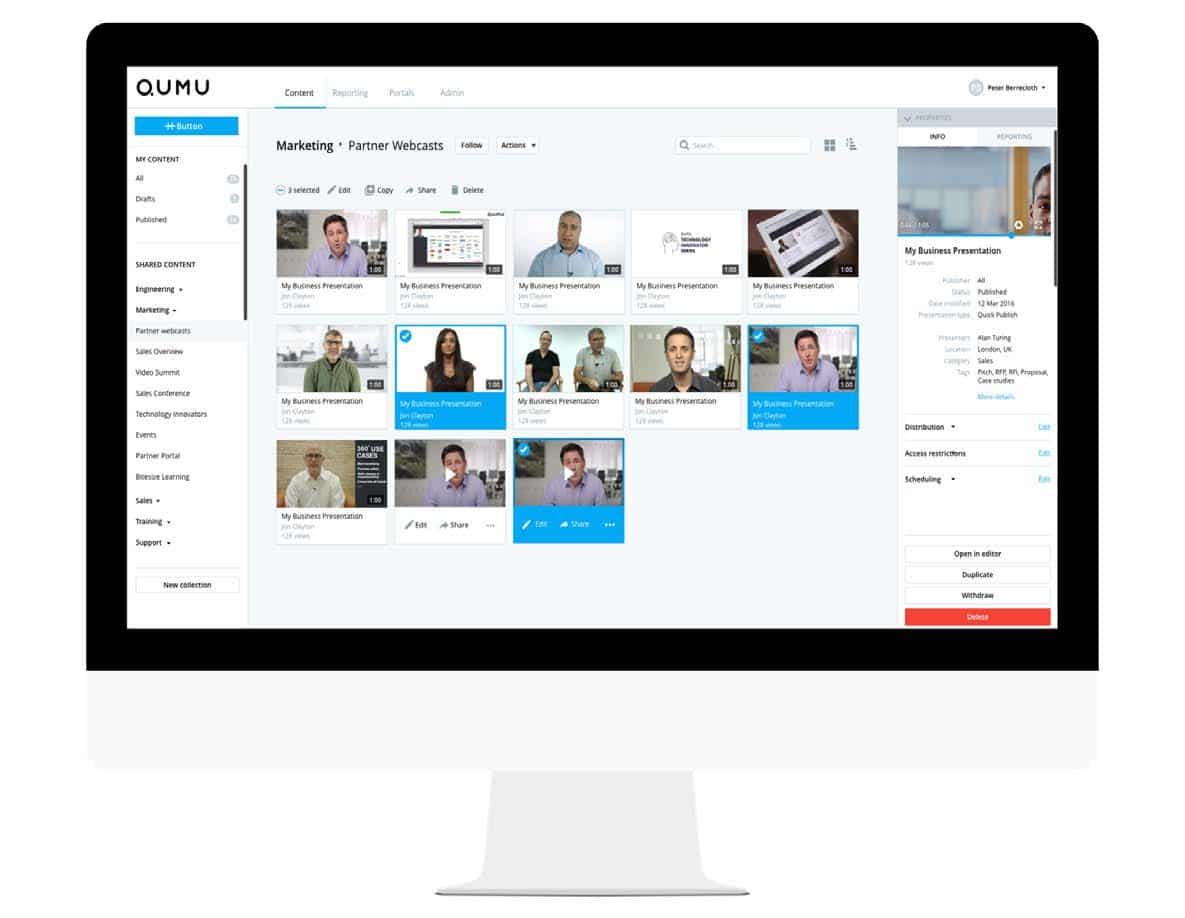
A centralized enterprise video platform eliminates this fragmentation by creating a single, searchable hub for video communications.
Measuring Employee Engagement Is Difficult
View counts only tell part of the story.
Communication leaders increasingly need answers to questions like:
- Who watched the message?
- How much of the video did employees watch?
- Which departments are most engaged?
- Which communications are driving action?
Without meaningful analytics, it's difficult to measure the effectiveness of an internal communications strategy or demonstrate its business value.
Governance and Security Matter More Than Ever
Organizations are sharing increasingly sensitive information through video, including executive announcements, financial updates, compliance training, and confidential business communications.
This makes secure video communications a business priority.
Enterprise organizations require role based permissions, governance, audit trails, and security controls that protect sensitive information while ensuring employees can access the content they need.
Frontline Employees Are Still Hard to Reach
Desk based employees often receive information through collaboration platforms, but frontline workers frequently miss important updates because they don't spend their day connected to corporate systems.
An effective employee communication platform ensures everyone receives consistent information, regardless of where they work.
How Leading Organizations Are Modernizing Internal Communications
Successful organizations are changing the way they think about video.
Instead of asking:
"How do we publish more videos?"
They are asking:
"How do we create better employee engagement through video?"
This shift has changed the role of video from a content repository to a strategic communication channel.
Creating Better Employee Experiences
Employees expect workplace technology to be as intuitive as the consumer platforms they use every day.
A modern enterprise video platform allows employees to search, discover, and watch leadership updates, training sessions, town halls, and knowledge sharing content from one secure location.
The easier content is to find, the more likely employees are to watch and engage with it.
Strengthening Leadership Communications
Video remains one of the most effective ways for leadership teams to connect with employees.
Seeing and hearing directly from executives creates authenticity, builds trust, and helps employees better understand organizational priorities.
When leadership communications are easy to access and available on demand, employees can stay informed regardless of where or when they work.
Using Analytics to Improve Employee Engagement
Modern enterprise video communications platforms provide insights that go far beyond simple view counts.
Organizations can understand viewing trends, identify engagement gaps, and continually improve communication strategies based on real data.
This allows Internal Communications teams to demonstrate measurable business impact while making better decisions about future communications.

Why Enterprise Video Platforms Are Gaining Momentum
An enterprise video platform for internal communications is designed specifically for organizations that need secure, scalable, and measurable video communications.
Unlike traditional video hosting solutions, enterprise platforms support:
- Internal communications
- Leadership communications
- Employee engagement
- Corporate training
- Knowledge sharing
- Compliance communications
- Live town halls and executive broadcasts
They also provide centralized governance, advanced analytics, enterprise security, and seamless integration with existing workplace tools such as Microsoft Teams and SharePoint.
For many organizations, this creates a significantly better experience for both employees and communication teams.
What Organizations Are Achieving
Organizations that invest in an enterprise video platform often experience measurable improvements across multiple areas.
Common benefits include:
- Higher employee engagement
- More effective leadership communications
- Better knowledge sharing
- Improved communication consistency
- Greater visibility into content performance
- Stronger governance and compliance
- Reduced administrative effort
- Faster access to important information
Perhaps most importantly, organizations gain confidence that critical messages are reaching the people who need them most.
The Future of Internal Communications
Internal communications is no longer just about distributing information.
It's about creating understanding, alignment, and meaningful connections across a distributed workforce.
As organizations continue to embrace hybrid work and digital transformation, video will remain one of the most effective ways to communicate at scale.
However, success isn't determined by how many videos an organization publishes.
Success comes from delivering the right message to the right employee at the right time through an experience that is secure, searchable, measurable, and engaging.
Organizations that adopt an enterprise video platform for internal communications are positioning themselves to build stronger employee engagement, improve leadership communications, and create a more connected workforce for years to come.
Frequently Asked Questions
What is an enterprise video platform for internal communications?
An enterprise video platform is a secure solution that helps organizations create, manage, distribute, and measure video content for internal communications, leadership messaging, employee training, and live events. It provides enterprise grade security, governance, analytics, and integrations that consumer video platforms typically lack.
Why are organizations investing in enterprise video platforms?
Organizations are investing in enterprise video platforms to improve employee engagement, strengthen leadership communications, centralize video content, support hybrid workforces, and gain analytics that demonstrate the effectiveness of internal communications.
How does video improve employee engagement?
Video creates a more personal and engaging communication experience than text alone. It helps employees better understand company updates, leadership messages, and training while improving knowledge retention and organizational alignment.
What should organizations look for in an enterprise video platform?
Key capabilities include secure video communications, advanced analytics, centralized video management, governance and permissions, live streaming, accessibility features, searchable content, and integrations with platforms like Microsoft Teams and SharePoint.
Why is measuring internal communications important?
Measuring employee engagement helps organizations understand whether important messages are reaching employees, identify communication gaps, and continuously improve their internal communications strategy using real data.
 English
  Français
  日本語
日本語  Español
  Italiano
  Nederlands
  Deutsch